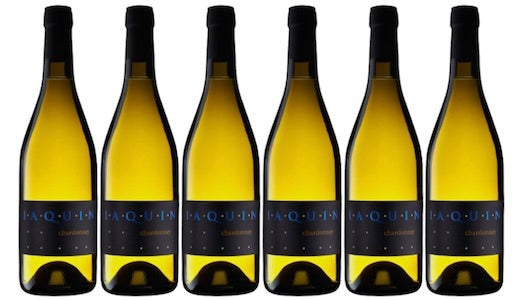
Chardonnay
Share
Chardonnay is one of the world’s most widely planted and versatile white grapes, with its origins in Burgundy, France. It is often called a “winemaker’s grape” because it responds so readily to decisions made in the vineyard and cellar. Thought to be a natural cross between Pinot Noir and Gouais Blanc, the grape likely takes its name from the stony soils of its original vineyards.
Some trace the name to a village called Chardonnay in the Mâconnais, in southern Burgundy, though the link between the village and the grape is debated. Burgundy remains its spiritual home, with Chablis producing crisp, mineral-driven wines and Meursault known for richer, buttery expressions, while Champagne relies on Chardonnay for elegance and finesse in its sparkling wines. Chablis grows on ancient Kimmeridgian limestone full of fossilized oyster shells, and the Côte de Beaune is home to prestigious names such as Meursault, Puligny-Montrachet, and Chassagne-Montrachet, along with the Grand Cru Montrachet. In Champagne, it is the sole grape in Blanc de Blancs, and it is also a key partner to Pinot Noir and Pinot Meunier in many blends.
The grape thrives globally, adapting to a range of climates and soils. It is planted in virtually every wine-producing country, and in the 1980s and 1990s its popularity surged so strongly that “ABC” (Anything But Chardonnay) became a catchphrase among drinkers tired of heavily oaked styles. California, Australia, New Zealand, and South Africa all produce distinct styles, from unoaked and citrusy to full-bodied, tropical, and oak-aged. Notable examples include Sonoma and Napa in California, Margaret River and the Adelaide Hills in Australia, and Marlborough and Hawke’s Bay in New Zealand.
Chardonnay’s small, relatively neutral berries allow winemakers to shape the wine’s character, with oak aging adding layers of vanilla, toast, and buttery notes. The buttery quality usually comes from malolactic fermentation, which converts sharp malic acid into softer lactic acid, while time on the lees adds a creamy, bready texture. Its mid-to-late ripening makes harvest timing important, influencing flavor and structure. The vine buds early, which leaves it vulnerable to spring frost, particularly in cool regions like Chablis, where growers sometimes light heaters or candles among the rows to protect the buds.
In the glass, Chardonnay can be anything from bright and refreshing to rich and opulent. Cool-climate versions tend toward green apple, lemon, and mineral notes, while warmer sites bring peach, pineapple, and mango. High acidity gives it structure and aging potential, while its flavor can span green apple, pear, citrus, and mineral notes to tropical fruits and vanilla depending on the winemaking approach.
With bottle age, top examples of Chardonnay develop notes of honey, hazelnut, and toasted brioche, and the finest white Burgundies can evolve gracefully for a decade or more. This adaptability has made Chardonnay a global favorite, capable of expressing both its terroir and the winemaker’s style. At the table, lighter, unoaked styles suit oysters, shellfish, and salads, while richer, oaked versions pair well with roast chicken, lobster, creamy sauces, and soft cheeses.